

History of Dussehra
Dussehra is on the way and we people already started celebrating Navaratri all across India. Let us delve into what our history books are telling about the significance of Navaratri. Dusshera (vijaya dashami) is one of the most important Hindu festivals in India where all people from the Hindu religion gather together and offer prayers to the goddess Durga. The festival marks the victory of good over evil. The name Dussehra is derived from the Sankskrit words dasha means ten and hara means death or defeat. Which has a tale from Tretha Yuga, symbolizing the defeat of ten-headed king Ravana in the hands of lord Rama, a key episode from the epic story Ramayana.
There are two prominent legends associated with Dussehra:
- The victory of Lord Rama over Ravana:
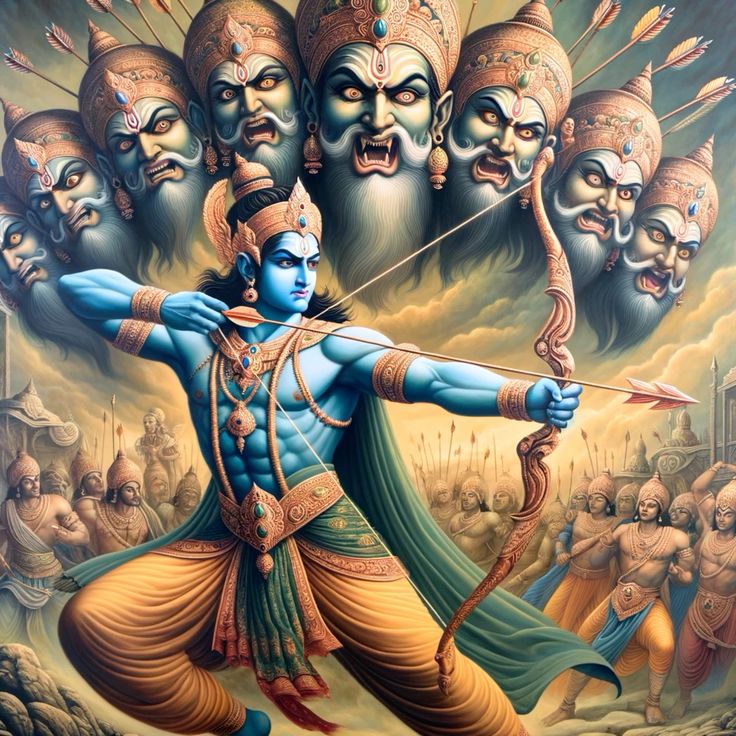 According to the Ramayana, Dussehra commemorates the victory of Lord Rama over the ten-headed demon king Ravana, who had kidnapped Rama's wife, Sita. The festival marks the end of Rama's 14-year exile and his successful return to Ayodhya after defeating Ravana. Effigies of Ravana, his brother Kumbhakarna, and his son Meghnath are burnt to symbolize the destruction of evil forces.
- Victory of Goddess Durga over Mahishasura:
 Another legend that ties into the festival is the victory of Goddess Durga over the buffalo demon Mahishasura, after a fierce nine-day battle. This victory is celebrated as Durga Puja in several regions, especially in West Bengal, and the tenth day, Vijayadashami, marks Durga's victory.
Both of these stories share the same moral—the ultimate triumph of right over wrong.
Dussehra Celebrations Across India
Dussehra is celebrated differently across India, reflecting the country's diverse cultural heritage. Each state has its customs, regional narratives, and celebrations.
- North India
Celebration Theme: Victory of Lord Rama over Ravana
 Uttar Pradesh, Delhi, Punjab, Haryana: The most popular form of Dussehra celebration in North India is the enactment of the Ramlila, a dramatic re-enactment of the Ramayana, which culminates in the burning of large effigies of Ravana, Meghnath, and Kumbhakarna on the tenth day. Major cities like Delhi, Varanasi, and Lucknow see grand processions, and the entire city is lit up with lights, fairs, and vibrant performances.
Kullu (Himachal Pradesh): In Kullu, Dussehra takes on a unique form. It is celebrated for seven days and begins on Vijayadashami. The main attraction is a grand procession of the local deity Raghunathji, along with other gods and goddesses from nearby villages, signifying a large community gathering. Instead of burning Ravana's effigy, the festival focuses on prayers and community participation.
2. West Bengal
Celebration Theme: Victory of Goddess Durga over Mahishasura.
 In West Bengal, Dussehra coincides with the last day of Durga Puja, the largest festival in the state. On Vijayadashami, after days of worshipping Goddess Durga, the idol of the goddess is taken for visarjan (immersion) in rivers or water bodies. Women smear each other with vermillion powder (Sindoor Khela), marking the farewell of Durga as she returns to her heavenly abode. This day is also a celebration of Bengali culture, music, dance, and feasting.
- Gujarat
Celebration Theme: Navratri and Dussehra
 In Gujarat, Dussehra marks the end of the nine-day Navratri celebrations, which involve worshipping Goddess Durga. The most famous aspect of Navratri in Gujarat is the Garba and Dandiya Raas dance, performed by people dressed in colorful traditional outfits. On the tenth day, effigies of Ravana are burned, and prayers are offered to Goddess Durga.
- Maharashtra
Celebration Theme: Victory of Good over Evil
 In Maharashtra, the festival of Dussehra holds significant religious importance. On this day, families worship their vehicles, books, and other tools of their trade (called Ayudha Puja) to seek blessings for future success. It also marks the conclusion of Navratri, and in cities like Mumbai and Pune, processions and plays depicting the life of Lord Rama are performed. The festival is marked by social gatherings and the exchange of Apta leaves, considered symbols of gold.
- Karnataka
Celebration Theme: Victory of Durga over Mahishasura and Lord Rama's Victory
 The city of Mysuru in Karnataka hosts one of the grandest Dussehra celebrations in India. Mysuru Dasara is a ten-day event marked by processions, cultural performances, and royal traditions. The highlight is the procession of Jumbo Safari on the day of Vijayadashami, where a decorated elephant carries the idol of Goddess Chamundeshwari, the royal deity of the Wodeyars (Mysore's erstwhile royal family). Mysore Palace is lit up with thousands of lights, and folk music and dance performances are held across the city.
- Tamil Nadu
Celebration Theme: Navratri and Ayudha Puja
 In Tamil Nadu, Dussehra is a part of the larger Navratri festival, which is celebrated as Bommai Golu, where beautiful dolls and figurines of gods, goddesses, and mythological characters are arranged on steps. On Vijayadashami, children are often initiated into education through a ceremony called Vidyarambham. Temples are adorned with flowers, and devotees pray to Goddess Durga, Saraswati, and Lakshmi. Ayudha Puja is another important ritual observed here.
- Andhra Pradesh and Telangana
Celebration Theme: Worship of Shakti and Victory of Good over Evil
 In these southern states, Dussehra is dedicated to Goddess Kanaka Durga, an incarnation of Durga. People visit Kanaka Durga Temple in Vijayawada in large numbers. It is also customary to offer prayers and seek blessings for success and prosperity in their personal and professional lives. Celebrations are marked by various cultural activities and processions of the goddess.
- Odisha
Celebration Theme: Durga Puja and Ravan Dahan
 Similar to Bengal, Odisha celebrates Dussehra as the conclusion of Durga Puja. On the day of Vijayadashami, idols of Goddess Durga are immersed in rivers and lakes. The practice of Ravan Dahan (burning the effigies of Ravana) is also carried out in many places. The cities of Cuttack and Bhubaneswar are known for their elaborate Durga Puja pandals and celebrations.
- Bihar
Celebration Theme: Ramlila and Fairs
In Bihar, Dussehra is celebrated with great enthusiasm. Large-scale Ramlila performances are staged in towns and villages, drawing huge crowds. Fairs and markets spring up, and the effigies of Ravana are burnt in a symbolic gesture to mark the triumph of good over evil.
- Kerala
Celebration Theme: Vidyarambham (Initiation into Learning)

In Kerala, Dussehra is celebrated as Vidyarambham, where young children are initiated into learning. On Vijayadashami, children are made to write their first letters on sand or rice, seeking blessings from Goddess Saraswati, the goddess of knowledge and wisdom. The festival has a strong focus on education and cultural enrichment.
Dussehra is not just a festival but a reminder of the eternal fight between good and evil, celebrated in diverse ways across the country. our team wishes you and your family a very happy dussehra. may goddess durga maa shower her blessings on your family. for more details and similar topics follow @fortaze