

Imagine gazing up at the infinite sky on a warm, grassy hill on a starry night. The moon shines bright, and the number of twinkling stars stretches endlessly above. You ask: "Why don't the stars fall? Why does the moon stay up there, glowing?"
Long, long ago, in a land of ancient wisdom and curious minds, there lived Indian scholars who asked the very same questions. However, instead of just wondering, they sought to find answers. They observed the skies, scribbled calculations, and wrote their ideas in beautiful old scripts. These ideas are how the Earth spins, why things fall to the ground, and how the planets move so far ahead of their time that the rest of the world only caught up many centuries later.
This is the story of those brilliant minds Aryabhata, Brahmagupta, Bhaskaracharya, and Varahamihira, who had discovered the universe's secrets long before others. Even though their discoveries have shaped the science we know today, they have overshadowed some of their contributions. Let us plunge into their world and unveil the wonders they have revealed.
Contributions of Indian scholars have usually been marginalized in the course of history toward scientific and mathematical achievements. Ancient Indian texts show an understanding of concepts that eventually dominated the Western world. For example, the works laid by Indian astronomers and mathematicians on the principles of gravity centuries before Sir Isaac Newton's laws were formulated.
Indian Contributions to Gravity and Astronomy
1. Varahamihira
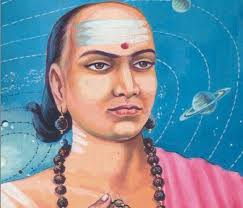 Varahamihira
Varahamihira was a renowned Indian astronomer and a famous mathematician who worked to understand the celestial movement and the natural world. His observations indicated that Indians have had a lot of insight into astronomical phenomena way back.
2. Brahmagupta
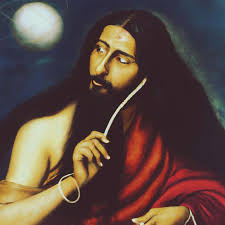 brahmagupta
He also has an addition to Siddhanta Shiromani, where Brahma Gupta further extended celestial mechanics. He described the gravitational attraction of planets and described their motion. His contribution was the forerunner of many theories, yet to be in the spotlight.
3. Bhaskaracharya
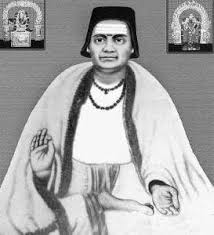 baskaracharya
These ideas were later developed by the astronomer of the 12th century, Bhaskaracharya. The work done by Bhaskaracharya in Surya Siddhanta throws light on the gravity force of attraction (Gurutvakarshan Shakti), reflecting how objects are attracted towards the Earth. Bhaskaracharya's original book Leelavati further elaborates on the idea regarding the mutual attraction that is developed between the planets and hence develops knowledge regarding planetary stability.
4. Aryabhata
 aryabatta
In Surya Siddhanta, Aryabhata states that the Earth is spherical and travels on a fixed course. The theory of Earth not falling is provided by Dharamadhyamika Shakti, which is well over a thousand years before the Western world could even think about it.
Why do Indian Contributions Go Unnoticed?
Indian thinkers have never been valued by the global world, though their thoughts were groundbreaking. This can be attributed to several factors.
•Colonial Narratives: In the colonial era, indigenous knowledge was suppressed or dominated by Western-centric education systems. Indian intellectual contributions were ignored or devalued to establish European supremacy.
• Lack of Documentation: Indian scientific and mathematical progressions were very deep-rooted in ancient texts like Vedas, Puranas, and other scriptures written in Sanskrit. The language and lack of systematic documentation in contemporary formats led to their overlooking.
•Transmission Gap: Most of the Indian concepts, such as zero and trigonometry, were only transmitted to Europe through scholars from the Arab world. This intermediate transmission often brought about forgetting or miscredit of the original Indian authors.
The Way Ahead
There is an urgent appeal to reclaim this intellectual wealth. This can be accomplished by:
1. Global Inclusion: Tndian contributions should be introduced into curricula all over the world so that the right source of seminal discoveries comes to the fore.
2. Preservation of Manuscripts: These manuscripts should be digitized and translated so that researchers worldwide could access them.
3. Media Campaigns: Through media, documentaries, and academic discourses on programs of India's historical contributions, the knowledge gap could be bridged.
Conclusion
Indian scholars like Aryabhata, Brahmagupta, and Bhaskaracharya laid the grounds for understanding the universe in its intricate mechanics. These minds deserve to be paid their due and acknowledged through appreciation, not just by being historically correct but through the inspiration for generations to dig up the treasures of ancient knowledge that India holds. The world should recognize that the story of science is incomplete without what India has to say about it.